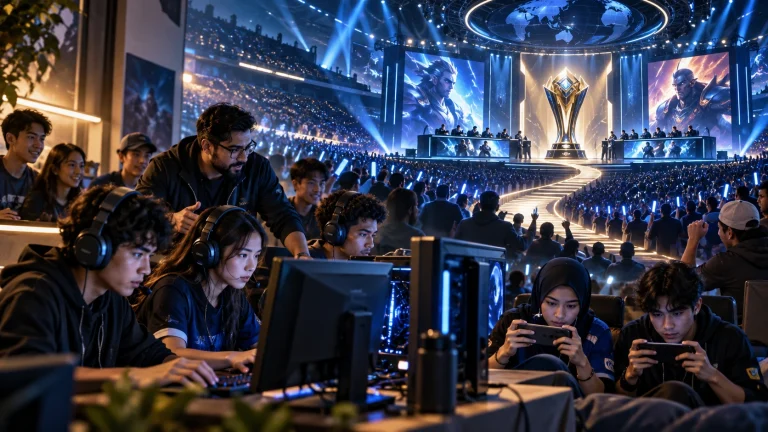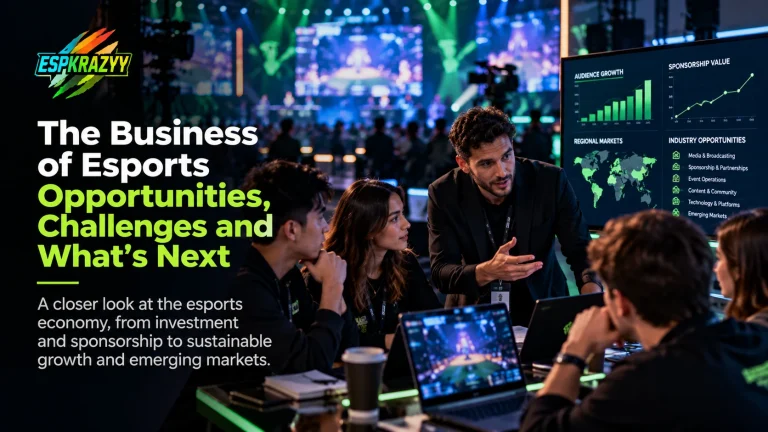
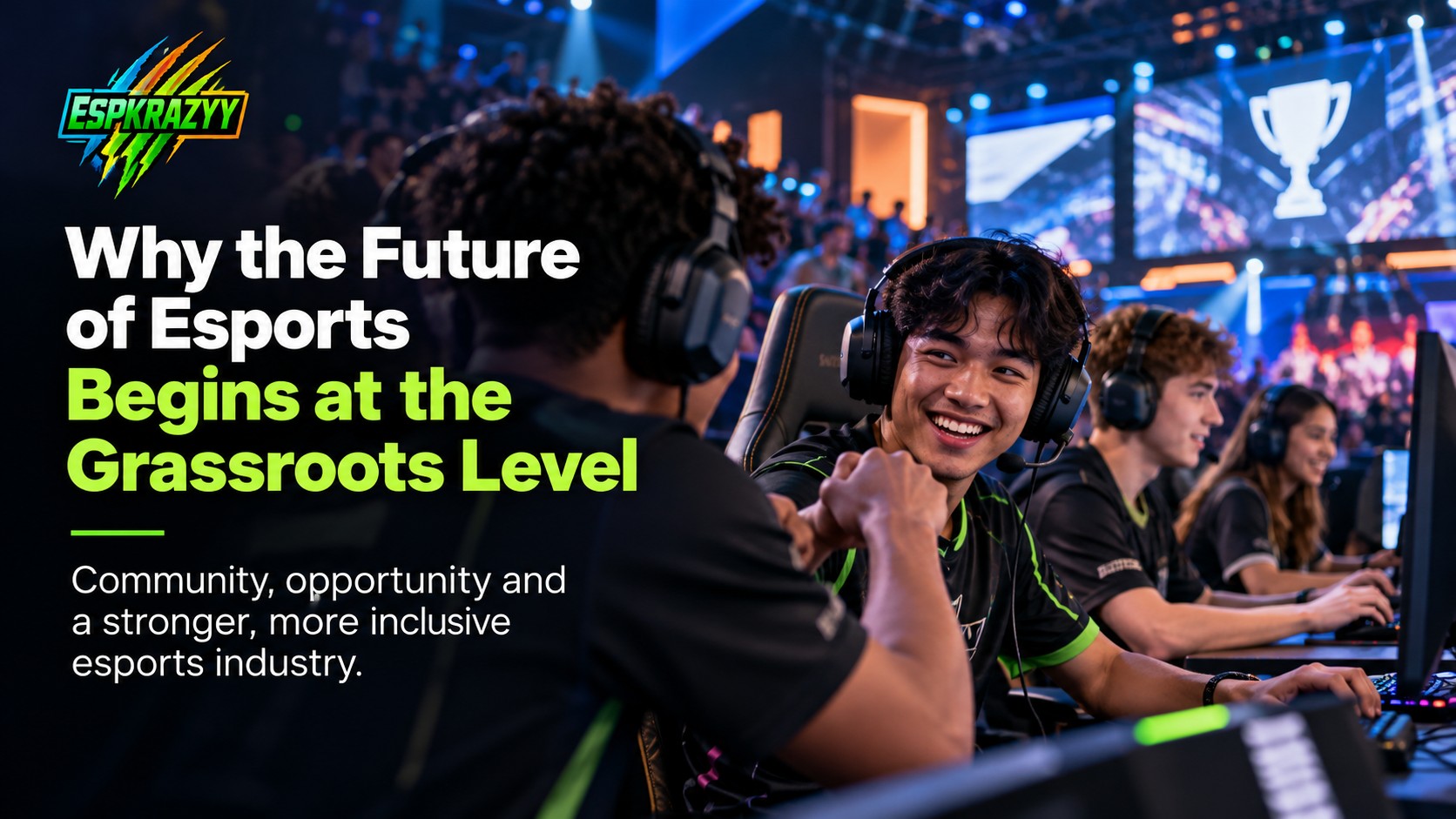
When people think about esports, they often picture enormous arenas, professional teams, global championships and prize pools that attract international attention. But the long-term future of competitive gaming may depend far more on what happens away from those major stages.
In schools, community centres, university societies, local gaming groups and online communities, a different side of esports is developing. It is less concerned with celebrity players and global sponsorship deals and more focused on participation, shared experiences and the opportunity to compete.
This is grassroots esports, and its importance to the wider industry deserves far greater recognition.
Esports Cannot Thrive on Professional Competition Alone
Professional esports plays an important role in attracting audiences, inspiring players and demonstrating the potential of competitive gaming as entertainment. Major competitions create memorable moments, celebrate exceptional talent and give the industry international visibility.
However, the professional scene represents only one part of a much larger ecosystem.
For esports to remain relevant and sustainable, people must have meaningful opportunities to participate long before they reach a professional level, and even when becoming professional is not their ambition.
Traditional sports offer a useful comparison. Football does not exist only because of the Champions League or the World Cup. Its cultural importance comes from millions of people playing in schools, parks, amateur leagues and local communities.
Most participants will never become professional footballers. Their participation still matters.
Competitive gaming should be understood in much the same way.
Participation Creates Stronger Communities
One of the greatest strengths of grassroots esports is its ability to bring people together through a shared interest.
A local gaming competition can introduce people who might otherwise never meet. An amateur team can help participants develop communication skills, manage disagreements and learn to work towards common objectives.
Online communities can also connect players across geographical boundaries, particularly where local competitive gaming infrastructure remains limited.
These interactions offer value beyond match results.
When esports communities are built around respectful competition, consistent participation and positive leadership, they can create a sense of belonging that extends well beyond the game itself.
But community development does not happen automatically. It requires effective moderation, clear expectations, inclusive environments and people willing to take responsibility for the experience of others.
Strong esports communities are not simply collections of players. They are environments in which people feel welcome, valued and motivated to return.
Accessibility Must Be Part of the Conversation
Accessibility is another important consideration in the development of grassroots esports.
Competitive gaming can create opportunities for participation across different backgrounds, abilities and locations. However, those opportunities depend on practical factors such as equipment costs, reliable connectivity, accessible competition formats and the availability of supportive communities.
Not every aspiring participant has access to an expensive gaming computer, dedicated equipment or specialist facilities.
This is one reason mobile gaming and emerging esports markets deserve attention when discussing the industry’s future.
Smartphones provide a competitive gaming entry point for many people, although device quality, mobile data costs and internet reliability can still create barriers.
Making esports more accessible should not mean lowering competitive standards. It should mean creating appropriate opportunities for people with different levels of experience, resources and ambition.
The industry benefits when participation is not restricted to those who can afford the most expensive equipment or gain entry into established competitive networks.
Grassroots Esports Can Support Education and Personal Development
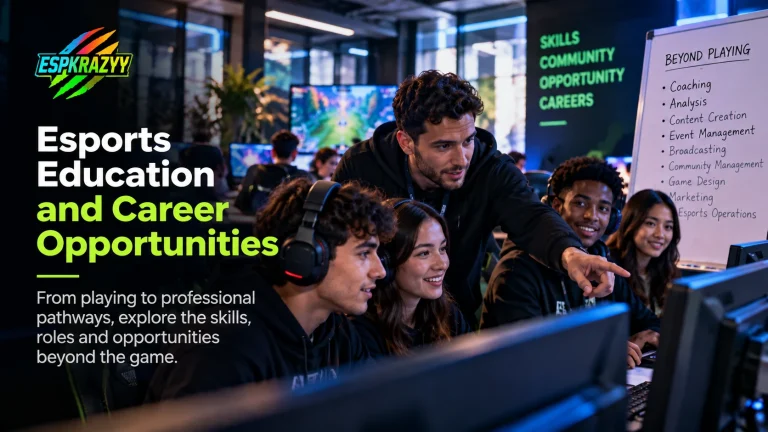
Esports also offers opportunities to develop skills that extend beyond gameplay.
Organising a small tournament requires planning, coordination, communication and an understanding of responsibilities. Managing a team introduces questions of leadership, motivation, conflict resolution and accountability.
Content creation, broadcasting, event production, community management and digital communication provide further opportunities for learning.
These experiences can be particularly valuable when connected to structured educational activities and appropriate mentorship.
Of course, participation in esports does not automatically produce these outcomes. Educational value depends on how activities are organised, supported and assessed.
Nevertheless, grassroots competitive gaming can provide a practical environment in which participants explore interests and develop abilities they may later apply in employment, further education or other community activities.
The wider discussion about esports education and careers should therefore extend beyond the ambition of becoming a professional player.
Building an Industry That Can Sustain Itself
Commercial sustainability remains one of the central challenges facing the esports industry.
Professional organisations, event operators, publishers, sponsors and community organisers all operate under different financial pressures. High-profile investment and audience attention do not necessarily translate into stable long-term economics.
Grassroots esports cannot resolve every commercial challenge. Community competitions also require resources, organisation and continued support.
However, a healthy participation ecosystem can create value that is not dependent entirely on major international events.
Regular community activity can encourage sustained engagement, strengthen relationships among participants and provide opportunities for local organisations, educational institutions and responsible commercial supporters to become involved.
The key is to approach development with realistic expectations.
Not every competition needs a large prize pool. Not every community needs an expensive production setup. And not every successful esports initiative needs to become a professional league.
Sometimes, success means creating an environment where participants enjoy competing, return regularly and encourage others to become involved.
The Importance of Leadership and Player Wellbeing
As grassroots esports develops, the quality of its leadership will become increasingly important.
Competition can encourage ambition and improvement, but poorly managed environments can also produce exclusion, toxic behaviour, unhealthy expectations and unnecessary pressure.
Organisers, coaches, educators and community leaders have an opportunity to establish healthier competitive cultures from the beginning.
This includes promoting fair play, discouraging harassment, communicating rules clearly and recognising that the wellbeing of participants matters more than the outcome of a single match.
It also means helping players understand that competition and respect are not opposing principles.
Learning to compete seriously while treating opponents fairly is an important part of developing a mature esports culture.
The Future Must Include Everyone Who Wants to Participate
Esports will continue to celebrate exceptional professional players and major international competitions. These achievements are important, and they deserve recognition.
But the industry’s future should not be measured exclusively by its biggest events, most prominent organisations or largest commercial agreements.
It should also be assessed by the opportunities available to ordinary participants.
Can newcomers find welcoming communities? Can amateur players access meaningful competition? Can educational institutions use esports constructively? Can local organisers create experiences that people want to return to?
These are fundamental questions for the long-term development of competitive gaming.
Grassroots esports is not a smaller version of professional esports. It is an important part of the foundation that gives the wider ecosystem relevance, participation and cultural depth.
The future of esports will not be shaped only by those who reach the biggest stages. It will also be shaped by the communities that give people their first opportunity to compete.
ESPKrazyy explores the people, communities and ideas shaping competitive gaming. Discover more perspectives in our Grassroots Esports and Insights sections.