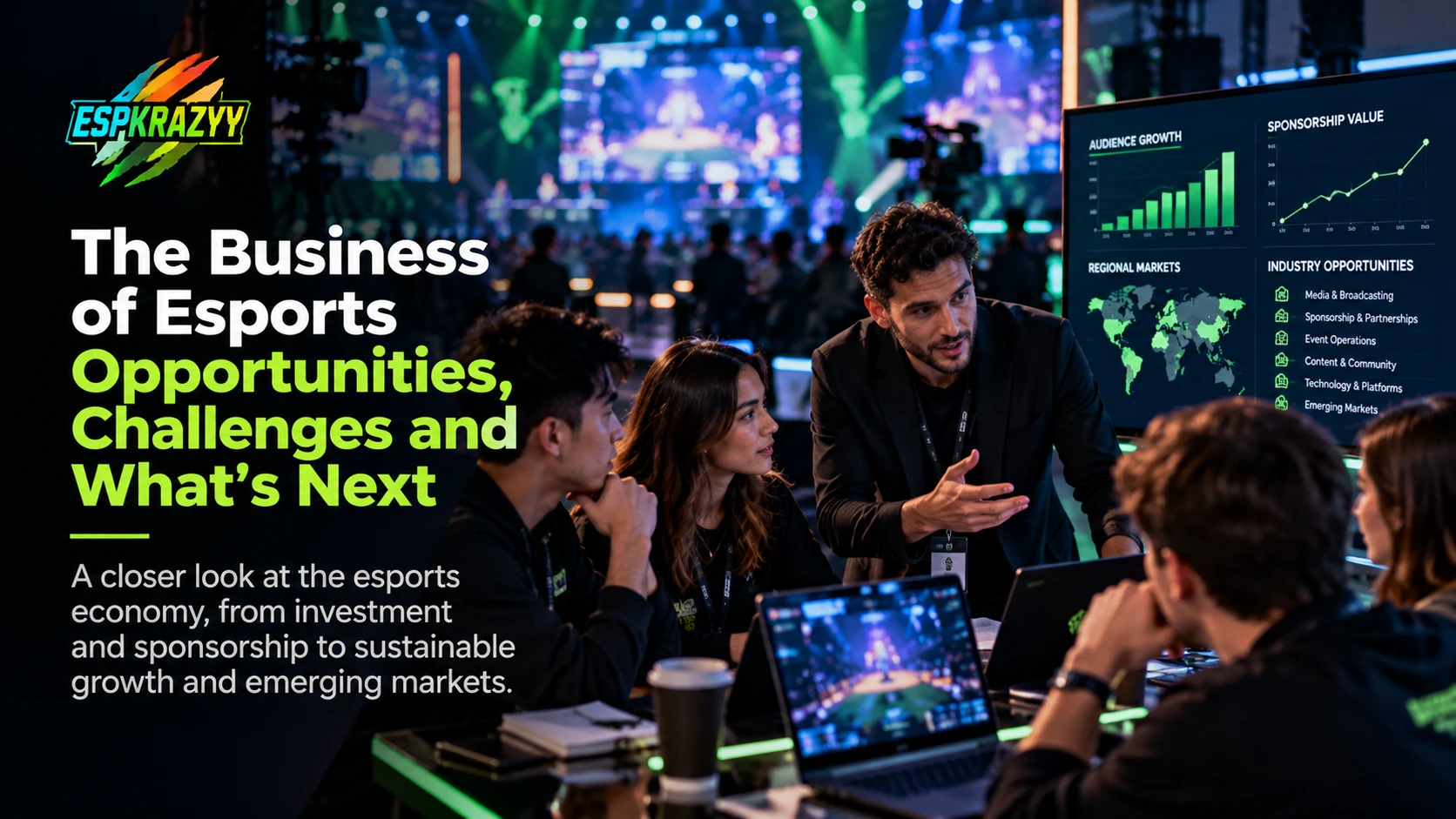
Esports has spent years attracting attention through major tournaments, international audiences, high-profile sponsorships and ambitious investment announcements. Yet behind the impressive production and competitive spectacle lies a fundamental business question: how does the industry create sustainable value?
Growth in visibility does not automatically translate into financial stability. Large audiences do not guarantee profitability, and investment alone cannot sustain an organisation indefinitely.
As competitive gaming continues to develop, the industry needs a more mature conversation about how esports businesses operate, where genuine commercial opportunities exist and what sustainable growth should look like.
The Difference Between Popularity and Profitability
Esports has demonstrated its ability to attract passionate audiences and create entertainment experiences around competitive gaming.
However, attracting attention and building a financially sustainable business are two different achievements.
A tournament can generate impressive viewership while struggling to cover its production costs. A professional organisation can build a recognisable brand without establishing sufficient recurring revenue to support its operations.
Similarly, a competitive gaming community may attract thousands of followers while generating relatively little direct commercial income.
None of these outcomes necessarily means the underlying activity lacks value.
It does, however, demonstrate why audience figures should not be confused with business performance.
Organisations need to understand not only how many people engage with their activities, but also what resources are required to maintain those relationships and whether the resulting revenue can support continued operations.
A successful esports business must ultimately create enough sustainable value to justify the resources required to operate it.
Why Esports Economics Can Be Challenging
Competitive gaming businesses operate within an unusual commercial environment.
Professional teams, event organisers, publishers, content creators, community operators and technology providers all participate in the ecosystem, but they do not necessarily share the same business model.
Each also faces different costs and commercial pressures.
A professional organisation may need to support player salaries, coaching staff, travel, accommodation, administration, marketing and competitive operations.
An event organiser must consider production, technology, personnel, venue costs, participant support and promotional activity.
Community-led activities may operate with considerably smaller budgets, but they still require time, coordination and resources.
These differences make it difficult to discuss the financial sustainability of esports as though the entire industry operates under one commercial structure.
Understanding the economics requires examining individual business models, their audiences and the costs of delivering the services they provide.
Sponsorship Is Important, but Dependence Creates Risk
Sponsorship has long been an important commercial component of esports.
Brands may support competitive teams, tournaments, broadcasts and creators because they want to connect with gaming audiences through relevant entertainment experiences.
When relationships are well structured, sponsorship can provide value to both the commercial partner and the esports organisation.
However, businesses become vulnerable when their operations depend too heavily on a small number of sponsors.
Marketing budgets can change. Commercial priorities can shift. Partnerships that appear secure may not continue indefinitely.
For esports organisations, this creates a need to demonstrate measurable value rather than relying exclusively on audience enthusiasm or the visibility of a major event.
Sponsors increasingly need a clear understanding of what their investment delivers, whether through brand exposure, audience engagement, content distribution or other agreed commercial objectives.
A sustainable partnership should be supported by realistic expectations, transparent reporting and outcomes that both sides can evaluate.
The Importance of Diversified Revenue
Revenue diversification can help reduce exposure to individual commercial relationships.
Depending on the nature of the organisation, esports-related revenue may come from sponsorship, media rights, event services, merchandise, memberships, content licensing, digital products or other activities.
However, diversification should not be confused with adding as many revenue streams as possible.
Every new activity introduces operational responsibilities, costs and potential distractions.
An organisation that attempts to pursue too many commercial opportunities before developing its core business may increase complexity without improving financial performance.
The objective should be to identify revenue sources that fit the organisation’s audience, capabilities and long-term positioning.
Commercial sustainability depends not only on generating income, but also on maintaining control over the costs associated with producing it.
Audience Engagement Is More Valuable Than Headline Numbers
Esports is often discussed through metrics such as views, followers, registrations and online reach.
These measurements can provide useful information, but they do not necessarily reveal the strength of an audience relationship.
A large number of occasional viewers may have different commercial value from a smaller audience that follows activities regularly and maintains a meaningful relationship with an organisation.
Engagement quality, repeat participation, audience trust and long-term relevance can all influence commercial outcomes.
For community-focused esports activities, the willingness of people to return and participate consistently may be particularly important.
This does not mean smaller communities are automatically more commercially valuable than large audiences.
It means different business models require different measures of success.
Organisations should evaluate the behaviours that matter to their commercial objectives rather than treating every increase in audience size as evidence of financial progress.
Grassroots Esports and the Wider Industry Economy
Grassroots esports is often discussed primarily in terms of player development and community participation.
Its economic importance deserves attention as well.
Amateur gaming communities can contribute to an ecosystem of organisers, educators, content creators, technical specialists and service providers.
Local events and community initiatives may also create opportunities for businesses and institutions to support activities relevant to their audiences.
These relationships do not need to imitate the commercial structures of professional esports.
In fact, community initiatives may be more sustainable when they operate at a scale appropriate to their resources and objectives.
The challenge is to distinguish meaningful development from growth that creates obligations the organisation cannot maintain.
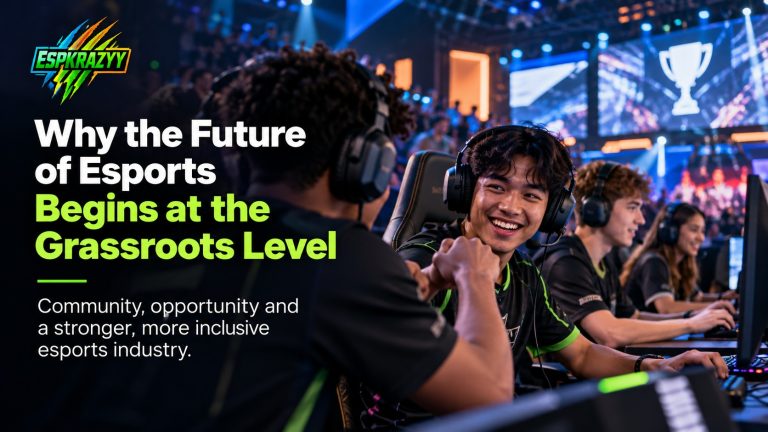
Our earlier analysis, Why the Future of Esports Begins at Grassroots Level, explores the importance of participation and community development.
From a business perspective, those same foundations can contribute to sustained engagement, trust and long-term relevance.
Mobile Esports and Emerging Market Opportunities
The development of mobile esports has introduced competitive gaming to audiences who may not have access to expensive PC or console hardware.
This has implications for how the industry evaluates potential markets and designs commercial relationships.
Across parts of Asia, Africa and Latin America, mobile-first digital behaviour provides an important context for competitive gaming participation.
However, it would be misleading to assume that a large mobile gaming audience automatically represents a commercially attractive esports market.
Purchasing power, connectivity costs, payment infrastructure, regulation, local partnerships and consumer expectations differ significantly between markets.
Business models that work in one country may perform differently elsewhere.
Successful market development requires an understanding of local conditions rather than simply applying strategies developed for established esports markets.
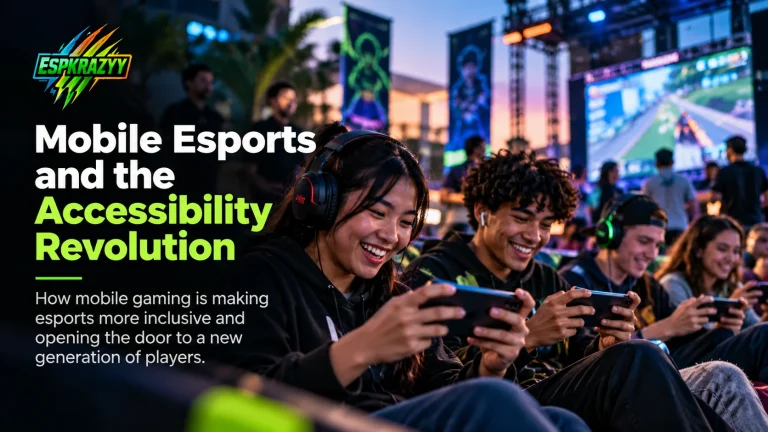
As discussed in Mobile Esports and the Accessibility Revolution, broad access to smartphones can create opportunities for participation, but it does not eliminate the practical barriers facing players and communities.
The same distinction applies commercially: audience accessibility and business viability are related considerations, not interchangeable outcomes.
Investment Should Support a Viable Business
External investment can provide resources for development, recruitment, technology, operations and expansion.
However, investment is a means of financing a business, not evidence that the underlying business model is sustainable.
When organisations prioritise rapid expansion without establishing realistic economic foundations, increased spending can amplify existing weaknesses.
A more disciplined approach examines the relationship between operating costs, revenue potential, audience retention and the resources required to achieve specific objectives.
Investors and business leaders need to consider whether growth improves the organisation’s position or simply increases the amount of funding required to continue operating.
This is especially important in sectors where market expectations can change quickly and where commercial performance depends on factors outside an organisation’s direct control.
Long-term sustainability is more likely to emerge from sound management and demonstrable value than from investment announcements alone.
The Role of Publishers, Platforms and Industry Relationships
Unlike many traditional sports, esports operates within an environment where game publishers retain significant influence over the competitive products around which communities develop.
Game availability, intellectual property rights, competition permissions, technical changes and commercial policies can affect the organisations involved.
This creates dependencies that differ from those associated with many established sporting activities.
Professional organisations and community operators must account for the rules and decisions of relevant rights holders when planning activities.
Partnerships across the industry can also help organisations access expertise, audiences and resources they might struggle to develop independently.
However, these relationships should be based on clearly understood responsibilities and realistic commercial expectations.
Strong industry partnerships are built through trust, consistency and mutual value rather than promotional announcements alone.
Professional Skills Are Part of Commercial Sustainability
Financial stability also depends on the quality of the people managing esports activities.
Competitive gaming organisations require expertise in operations, technology, marketing, finance, communication, leadership and many other disciplines.
Enthusiasm for gaming can be valuable, but it is not a substitute for professional competence.
As the industry develops, the ability to recruit, educate and retain capable professionals may become increasingly important.
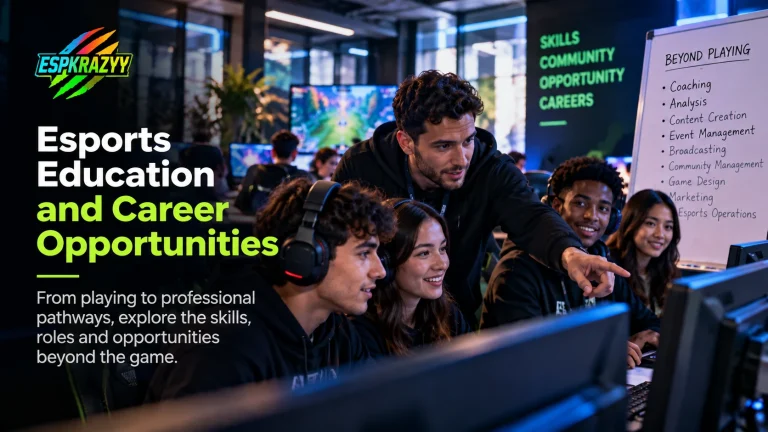
Our Education & Careers coverage examines these wider professional pathways and the skills that support competitive gaming beyond professional playing.
A sustainable esports ecosystem needs not only talented competitors, but also capable people who can manage organisations responsibly.
What Should Sustainable Growth Look Like?
There is no single model that guarantees success across every area of esports.
Professional teams, community organisations, events businesses and digital platforms have different objectives and economic characteristics.
Nevertheless, several principles deserve consistent attention.
Organisations need a clear understanding of their audience, a realistic assessment of operating costs and a credible explanation of how their activities create value.
They also need the flexibility to respond to changing market conditions without compromising the relationships that support their long-term relevance.
Growth should be assessed according to its quality, not only its speed.
An organisation that develops steadily, maintains strong relationships and operates within its resources may be better positioned for long-term success than one pursuing visibility at any cost.
Beyond the Hype: Building an Industry That Lasts
Esports has already demonstrated its capacity to entertain, inspire and connect people through competitive gaming.
The challenge ahead is to ensure that the businesses and communities supporting those experiences can continue operating sustainably.
That requires serious attention to commercial realities, responsible management, audience relationships and the differences between individual markets.
It also requires recognising that not every successful esports initiative needs to become a global entertainment business.
Some organisations may create lasting value through professional competition. Others may achieve meaningful success by supporting communities, developing skills or delivering specialised services.
Both have a place within a diverse industry.
The next stage of esports development should be measured not simply by how much attention the industry attracts, but by how effectively it converts that attention into sustainable organisations, meaningful opportunities and long-term value.
ESPKrazyy examines the economic, social and organisational issues shaping competitive gaming. Explore more in our Industry & Business and Insights sections.